Why Cancer Treatment Costs So Much in Malaysia
Chemotherapy at a Malaysian government hospital costs next to nothing. The drug after that can run five figures a cycle. A UPM cancer researcher explains why.
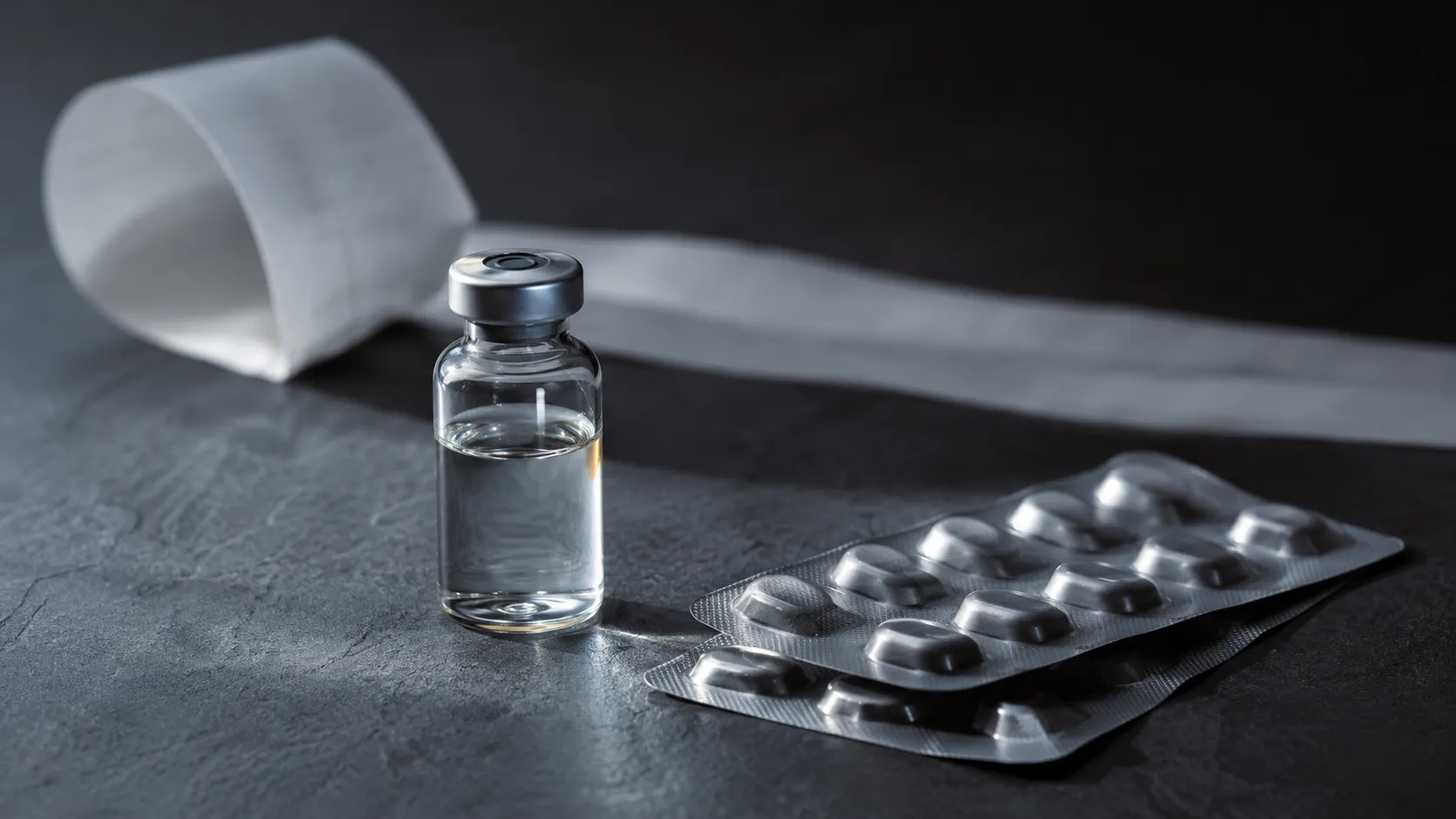
A Malaysian diagnosed with breast cancer can walk into a government hospital, go through a full course of chemotherapy, and pay almost nothing for the drugs. If that same person is told a year later that their body has stopped responding, the next option can be quoted at four or five figures for a single cycle. Nothing about the disease changed in between. The second drug simply is not on the list the government subsidises.
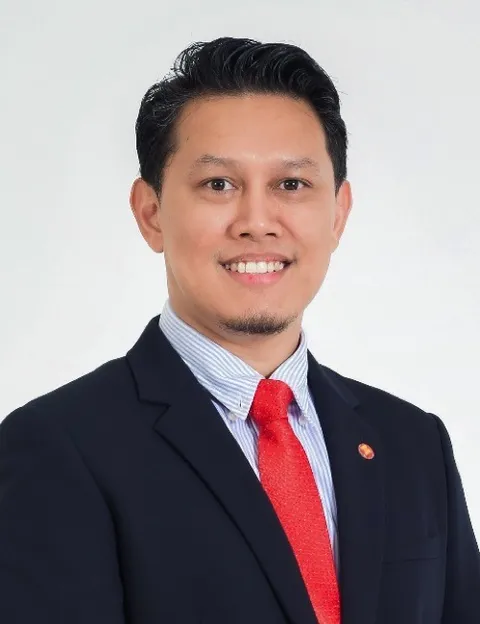
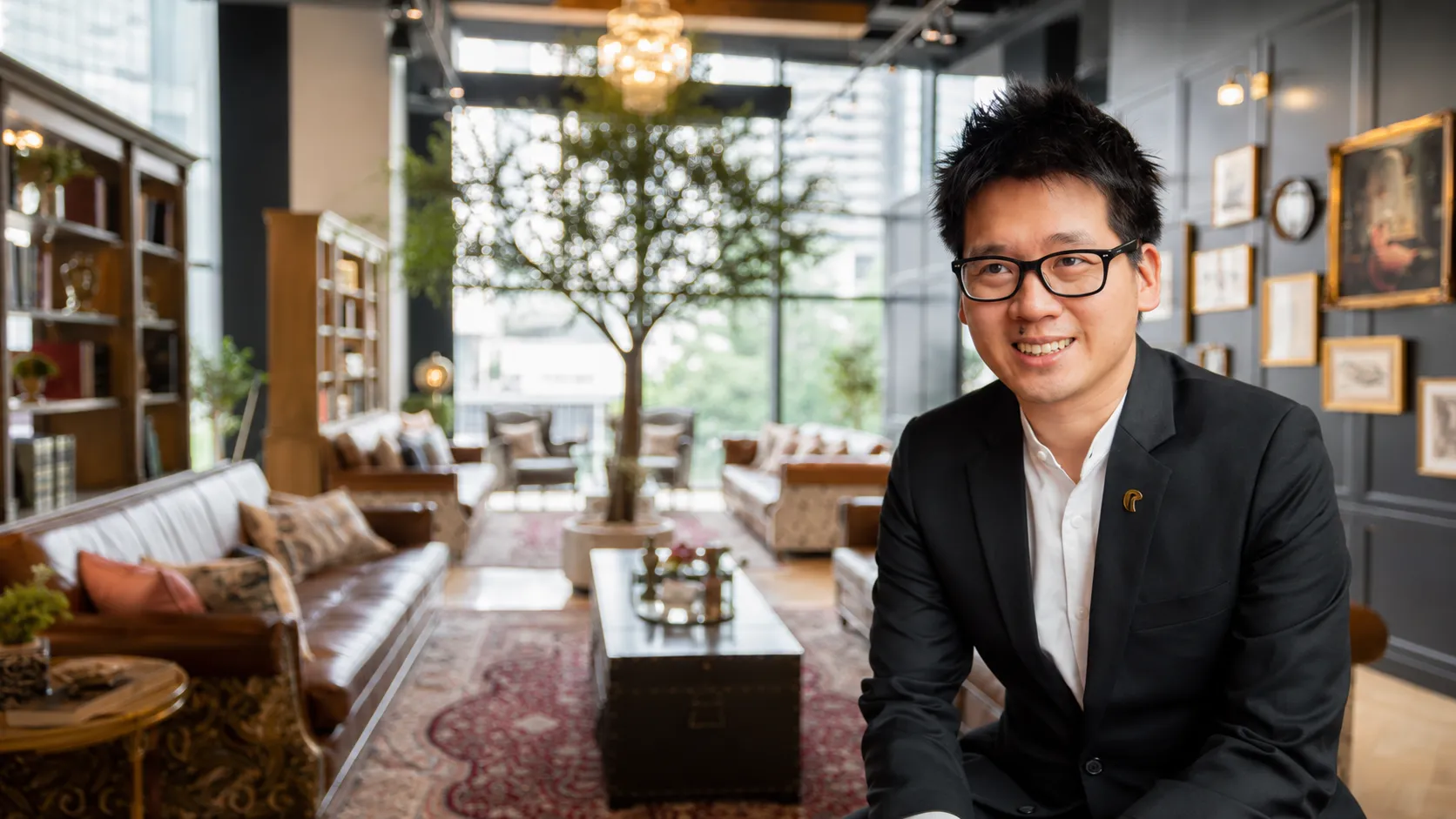
Assoc. Prof. Dr. Mas Jaffri Masarudin builds nanomaterials at Universiti Putra Malaysia, packages anti-cancer drugs inside them, and has spent the better part of two decades trying to make those drugs work harder at a lower dose. Ask him where the money actually goes and he gets specific fast. Hardly any of the price is decided at the pharmacy counter. Most of it was locked in years earlier, by how long the drug took to exist and by how badly the disease behaves once someone finally catches it.
1. You are paying for the twenty years before the drug worked
Doxorubicin is the example Masarudin keeps coming back to, mostly because it is ordinary. It is a workhorse, used widely in breast and colon cancer, and one of the drugs a Malaysian patient is most likely to be given.
Getting it from the laboratory through clinical trials and into clinical use cost roughly USD100 million, and that spending happened in the early eighties and nineties. In money of that era it is an enormous figure. Very few companies could commit that much, and committing it came with no guarantee the compound would survive trials at all. The journey from lab bench to market took 15 to 20 years.
That is a long stretch to spend money without earning any. Doxorubicin now brings in something around USD500 million a year, so the bet paid off. The size of that return is also the argument for the high price along the way. A company that waited two decades wants the money back in as few years as possible, and it is charging inside a patent window that will not stay open forever.
The result is a market only very large pharmaceutical companies can enter. The price on the vial has very little to do with what the vial costs to make, and a lot to do with the two decades of spending sitting behind it and the years left on the patent.
2. Late diagnosis shows up on the bill
Masarudin has a demonstration for this that works about as well on adults as it does on children. Line up identical containers of clear liquid, each one an organ with blood circulating through it. A mutation starts somewhere in one of them. Looking at the row, you cannot tell which one. Neither can the patient, and neither can a doctor who has no reason yet to go looking.
That invisibility is the first problem. A tumour grows quietly until it is big enough to produce a symptom, and by then it has often run out of room where it started and moved. Once it has spread to a second organ through metastasis, you still feel nothing, because it is not yet large enough to announce itself in either place.
So the symptom arrives late. Someone coughs up blood, gets tested, and the first site comes back clean. The symptoms persist, another site gets tested, and this one is different. Now the doctors have found a tumour, but they cannot stop there, because a cancer showing up in one organ is sometimes a secondary tumour that travelled from a primary site elsewhere. Every other site has to be checked too.
All that time spent working out where the cancer is, is also time the tumour spends growing. That is the part Masarudin says people underestimate. Advanced cancers, liver cancer especially, are routinely diagnosed at stage four, with the disease already distributed around the body.
A stage four patient pays for more cycles, for surgery alongside the chemotherapy, and for inpatient stays that only exist because the treatment is aggressive enough to need supervision. Masarudin is explicit that a meaningful share of the cost sits in those categories and not in the drug. In the Malaysian private sector, cancer surgery alone is estimated at RM5,000 to RM50,000 depending on complexity and hospital.
Treating a spread disease also means you can no longer aim. Hit one organ and you have missed the others, so the drug goes through the whole body, healthy tissue included. That is where most of the side effects come from.
3. Cancer is billed by the cycle, and the disease decides how many
Chemotherapy is almost never one dose. The first round kills most of the tumour, but some cells were shielded from it or were simply more resistant, and those survive. A second dose follows.
This is not a booster in the vaccination sense. After the first round the body is flooded with toxins and has to recover before it can take another hit, or the patient risks dying of the treatment instead of the disease. Depending on the cancer and its stage, a regimen might run two or three cycles, or five or six, spaced a week or two apart and tailored to the patient.
The rest period the patient needs is also the rest period the cancer gets. Say the first round kills 90 per cent of the tumour and leaves 10 per cent behind. Give the body two weeks to recover and those surviving cells have had two weeks as well, so the second cycle can be starting from a much larger number than the one the first cycle finished at.
Clinicians would shorten the gaps if they could. What stops them, beyond how much the patient can tolerate, is a population Masarudin calls the last line standing: cancer stem cells, the resistant ones left over after the rest have died. Like any stem cell, they can change into something else.
A patient can be told after two cycles that the tumour has mostly cleared and the prognosis looks good, then be told later that their body is no longer responding to treatment. The cells that survived have mutated into something the drug no longer touches, and the bill changes with them. Cancer, as Masarudin puts it, is a dynamic disease, and you cannot treat it with a static strategy.
Once the first-line drugs stop working, the patient moves to a second tier of drugs, and most of that tier is not on the government’s subsidised list.
4. Everything depends on whether the drug is in the Blue Book
Malaysia’s Ministry of Health subsidises chemotherapy heavily, but what it subsidises is a list. A government hospital dispenses the NPRA-approved drugs on the Ministry’s medicines formulary, known as the Blue Book. Tamoxifen and cisplatin are on it. What a patient pays for those at a government hospital, in Masarudin’s description, is next to nothing.
Everything else sits outside the list, and that is where cancer treatment starts to look like the stories people hear. Advanced formulations and newer therapies are not covered, because the budget impact of listing them is too high. Patients who need them either go to a private hospital or ask their government hospital to order the drug in as an out-of-pocket expense. Masarudin’s estimate for those is four to five figures per cycle.
The public figures line up with that. Immunotherapy, one of the genuine breakthroughs in oncology over the last fifteen years, is not listed on the Blue Book and is not available in Malaysian public hospitals, and a full course privately runs above RM100,000. Targeted therapy is estimated at RM5,000 to RM50,000 a month.
So Malaysian cancer costs come in two very different numbers, and which one you get depends on which side of a formulary your treatment falls on. No patient picks that. It comes down to whether your body keeps responding to the first-line drugs.
5. A patent narrows the supply, and expiry does not open it up
Masarudin explains patents with a drink. Someone spends a long time developing a new cordial, starts selling it, and it does well. A competitor sees the margin and works out they could make something similar. The original developer, not keen on handing over a market they spent years building, writes the recipe down, registers it with an authority, and now holds the sole right to produce it. The competitor can still sell that drink, but only by buying it from the person who owns it. Selling to another business turns out to be more profitable than selling to the public.
Applied to medicine, that is why supply for a given cancer can run through a single company. Doxil, the liposomal formulation of doxorubicin, ended up under Johnson and Johnson after its acquisition of ALZA. When one drug is the go-to for a particular cancer and one company controls it, the buyer has no leverage on price.
The instinct is that patent expiry solves this, and mostly it does not. Once a patent lapses and the compound is open to anyone, producing it at scale still requires a facility, and the facility is the expensive part. A plant has to be GMP certified, carry the right instrumentation to produce in bulk, and be tested and standardised against NPRA guidelines on a recurring basis. That is a capital requirement and a barrier to entry in its own right, so somebody still has to recover a large upfront spend even when nobody owns the molecule any more.
6. The cheaper version is a packaging problem
This is where Masarudin’s own work sits. There is no shortage of drugs that kill cancer cells. The hard part is getting them to the right cells at the right rate, and a lot of any dose ends up in healthy tissue instead.
A nanoparticle is built to fix that, and he wants several jobs done by one object. It has to be a vehicle, something that can actually hold the drug, which he compares to a balloon filled with water. It has to know where to go, which means putting molecules on the surface that behave like velcro and stick only to cancer cells. It also has to let go of what it is carrying, because a container that cannot release its cargo is useless. The whole assembly is 100 to 200 nanometres across.
Release is the part that changes the arithmetic. Instead of dumping the drug all at once, you poke small holes in the balloon so it seeps out slowly. Do that well and you can pack four times the dose into a particle that releases it at a quarter of the speed. The patient receives the equivalent of a six-cycle course in two administrations.
The patient then spends less time resting between cycles, which gives the surviving cancer cells less time to adapt. More of the drug also reaches cancer cells instead of healthy ones, so the collateral damage that drives so much of the supporting cost shrinks along with it.
It already works in practice. Abraxane wraps its drug in a shell of albumin, a naturally occurring protein and the main component of egg white. Cancer cells over-express receptors that take up albumin, because they are aggressive about absorbing nutrients, so they pull the particle in at a much higher rate than healthy cells do. The drug inside had previously needed a castor oil carrier called Cremophor to stay stable, because it does not dissolve in water, and the Cremophor was itself toxic to cells. Swapping a toxic carrier for one the body already recognises raised the drug’s effectiveness enormously, which meant smaller doses and fewer administrations for the same result.
7. Malaysia has the researchers but nowhere to make the drug
The obvious question is why a country with this expertise imports its expensive cancer drugs. Talent is not the issue, according to Masarudin. He is confident Malaysia has the people to develop novel anti-cancer approaches. What stops the work is everything that comes after the discovery.
Most drugs on the market are proprietary and IP-based, so adopting existing technology means paying someone in the middle. Developing something genuinely new avoids that, but then you meet the scale-up problem: a viable business needs production volume at a quality that satisfies NPRA, which brings you back to the certified facility and its recurring audits.
Then there is how research gets funded here. Masarudin’s read is that Malaysian funding has historically taken a shotgun approach, spreading a limited pot across as much work as possible rather than concentrating it where the potential is. He also thinks the balance has tilted too far towards product-based research, the kind where you can point at an output and watch an economy grow from it, and away from fundamental science.
That matters because you cannot engineer around a disease you do not understand. Nine out of ten Nobel laureates in molecular biology came out of fundamental research, and mostly out of the same handful of institutions, because those places do not pivot away from a fundamental agenda every time policy shifts. Try pitching DNA to a stakeholder as an economically viable product and you will get nowhere, which is awkward, given that CRISPR and PCR both came out of studying it.
Funders want to see a proof of concept before they will commit, and the proof of concept needs the research that has not been funded yet. Masarudin has a good analogy for it. Nobody wants to fund the development of a new nasi lemak recipe, but plenty of people will fund the shop once the recipe works. Fresh graduates asked for five years of experience know the feeling.
His own reason for staying in this work has nothing to do with commercial return. During his master’s at UPM, his brother, then a medical student in the UK, was diagnosed with stage three Hodgkin’s lymphoma. Masarudin took time off and moved to the UK to care for him, and sat through the chemotherapy cycles with him. He watched what the treatment did: days at the start of a cycle when his brother could not get out of bed or reach the toilet unassisted, a diet that changed completely, sharp weight loss. His brother died a few years after the diagnosis.
He came away with a question his lab is still working on. If we have drugs for this, why is the patient going through all of that and still not being cured? He has been chasing the delivery half of that answer since 2007.
What to actually do with this
- Ask the treating oncologist a specific question: is this drug on the MOH formulary, and is it first-line? The answer is the difference between a nearly free course and a five-figure one, so ask it early.
- Ask what the plan is if first-line treatment stops working, at the point of diagnosis rather than at the point of failure. Most of the financial exposure sits in that second tier.
- Read your medical card’s cancer clause properly. Check whether it covers non-formulary drugs, whether outpatient chemotherapy is included, and how the annual limit compares against a course of immunotherapy that can exceed RM100,000.
- Budget for the costs that are not the drug. Inpatient stays, accompanying surgery, scans, and the travel to whichever hospital is treating you add up faster than most people plan for.
- Take the free and subsidised screening programmes seriously, particularly if there is family history. A cancer caught before it moves is far cheaper to treat, and the gap is enormous.
- Do not read “not subsidised” as “better”. A drug is off the formulary because of what listing it would cost the Ministry, which tells you about its price and nothing about whether it suits your case.
Very little of the expense sits in the medicine itself. Most of it sits in the twenty years of development the medicine has to repay, in the months of quiet growth before anyone knew to look, and in the extra cycles the disease forces by adapting between them. Only the last of those is a science problem anybody is close to solving. Getting a drug to arrive in the right place, slowly, at a fraction of the dose, would take a chunk out of all three at once.
We went through all of this with Dr. Mas Jaffri on the channel, including what it would actually take to build a drug discovery ecosystem here: