Best Travel Card for Malaysians Abroad
We flew to Singapore and tested Ryt, Touch 'n Go Visa and Wise on the same ATM, MRT rides and meal. Here is which travel card actually gave the best value.
Every card issuer swears theirs is the cheapest to use overseas, with the best exchange rate and the most cashback going. So instead of arguing about it, we flew to Singapore and made three of them prove it on the same afternoon.
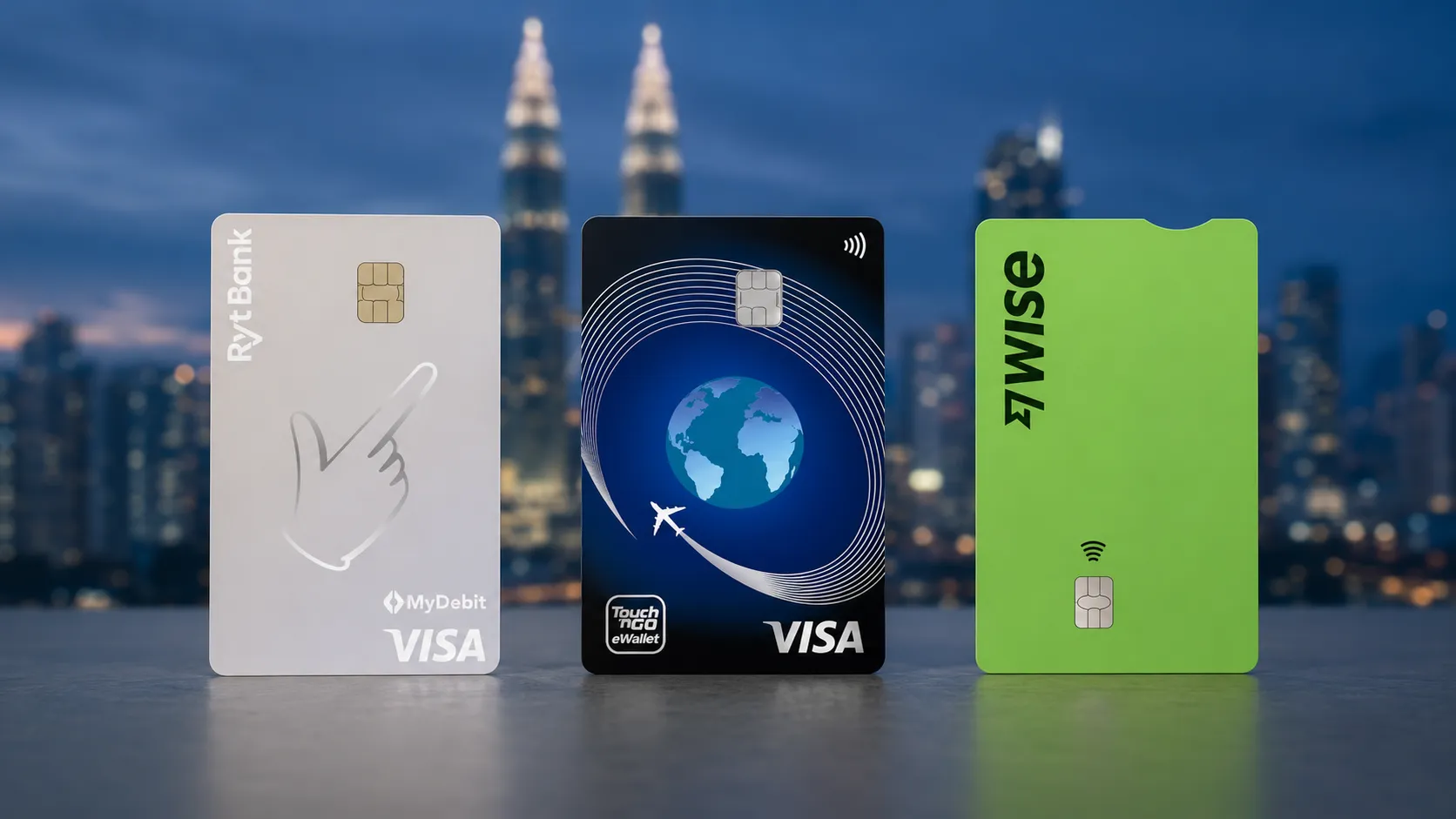
We took Ryt Bank’s debit card, the Touch ‘n Go Visa card and Wise, and ran them through the exact same transactions at the same time: an ATM withdrawal, MRT rides and a meal at Shake Shack. Same city, same amounts, same hour, so no card could hide behind a lucky moment in the market. The result was not the one most people expect. One card fell over before we even reached the ATM. The crowd favourite finished third in two of the three tests, and the card almost nobody talks about came out on top overall.
1. The three cards, and what each one promises
Before the test, a quick look at what you are actually choosing between.
Ryt Bank is the new digital bank launched by YTL and Sea, the group behind Shopee. Its card runs on Visa, works for overseas payments, and pays 1.2% cashback on most transactions abroad with no minimum spend. You top it up instantly from your bank and use it like any normal debit card, whether you are buying kopi in Bangsar or dinner in Orchard.
The Touch ‘n Go Visa card is linked to your Touch ‘n Go eWallet and spends straight from your wallet balance. It gives 0.5% cashback on regular spending, and up to 3% cashback when a single transaction goes above RM300. That RM300 threshold is the part to remember, because it decides whether the headline 3% ever actually applies to you.
Then there is Wise, the card most people already crown as the king of travel money. It lets you hold multiple currencies, convert them in advance, and spend at the mid-market exchange rate, the same rate you see on Google before any bank adds its margin. That reputation is exactly why we wanted to test it rather than trust it.
2. The test: same day, same city, same transactions
The setup was simple. Three of us, one card each, three challenges. Withdraw SGD 20 from an ATM, tap into the MRT, and order the same thing at Shake Shack. Same amounts, same time, same place, so it was as close to apple to apple as a real trip allows. Then we went home to KL and compared the bills line by line.
Everyone brought their own assumptions. The plan was to let the actual charges settle those assumptions instead.
3. The ATM withdrawal: Wise wins, and it isn’t close
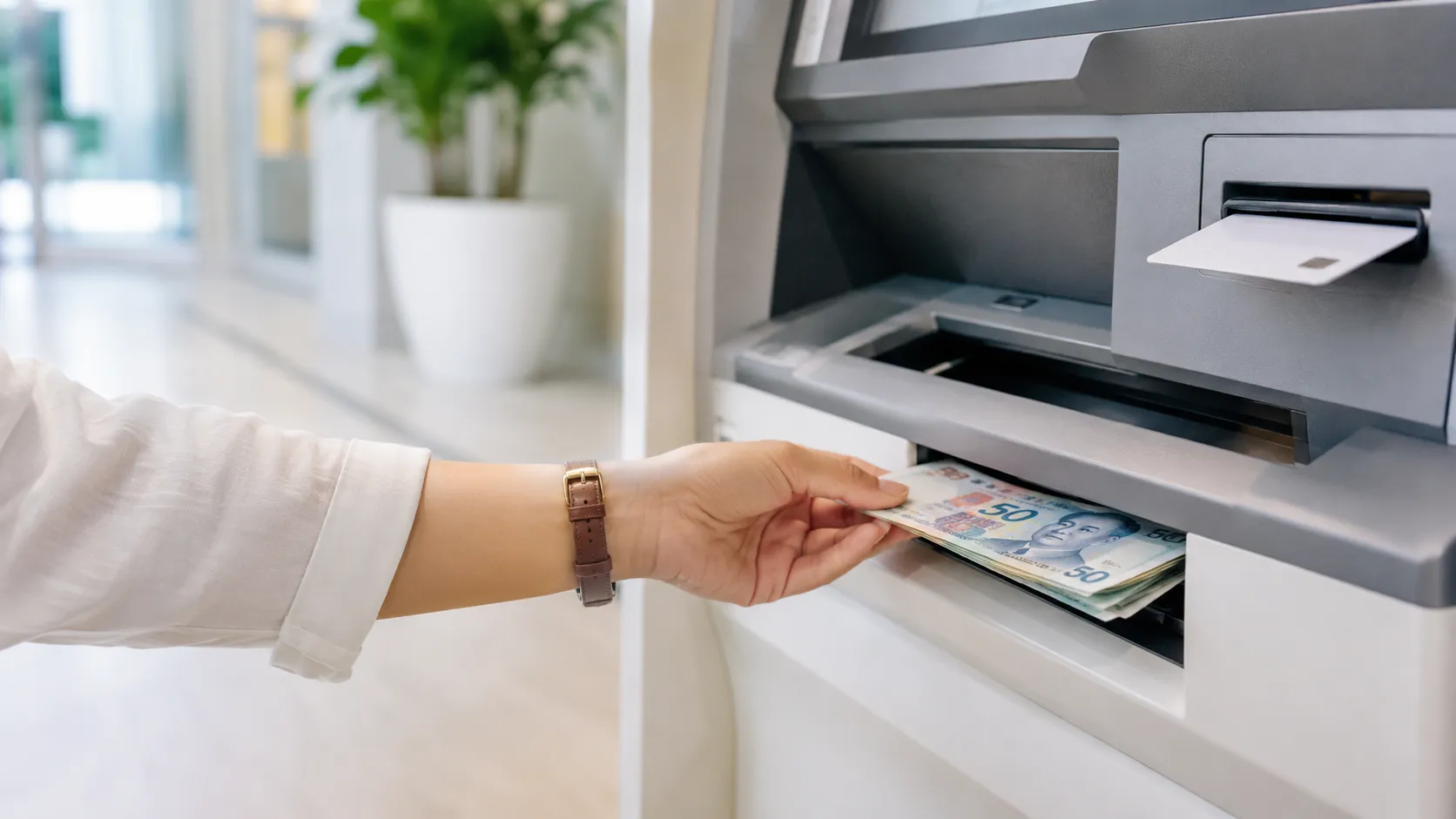
Cash still matters overseas. A card gets declined, a hawker stall only takes notes, and suddenly you need money in your hand. So the first test was pulling SGD 20 out of an ATM with each card.
Wise was the clear winner here. Ryt and Touch ‘n Go both follow Visa’s cash-withdrawal rate, which sits above the market rate you would get elsewhere. Even with Touch ‘n Go’s free-withdrawal perk, the exchange rate underneath still made it the pricier way to get cash. Wise won by a solid margin despite charging a roughly SGD 5 fee to withdraw, because its mid-market rate more than covered that fee.
The lesson travels well beyond this one machine. When you pull cash from a foreign ATM, the flat fee on the screen is not the number that matters most. The exchange rate baked into the transaction usually costs you more than the fee ever will, and that is where Wise earns its reputation.
4. Public transport: Ryt takes it right back
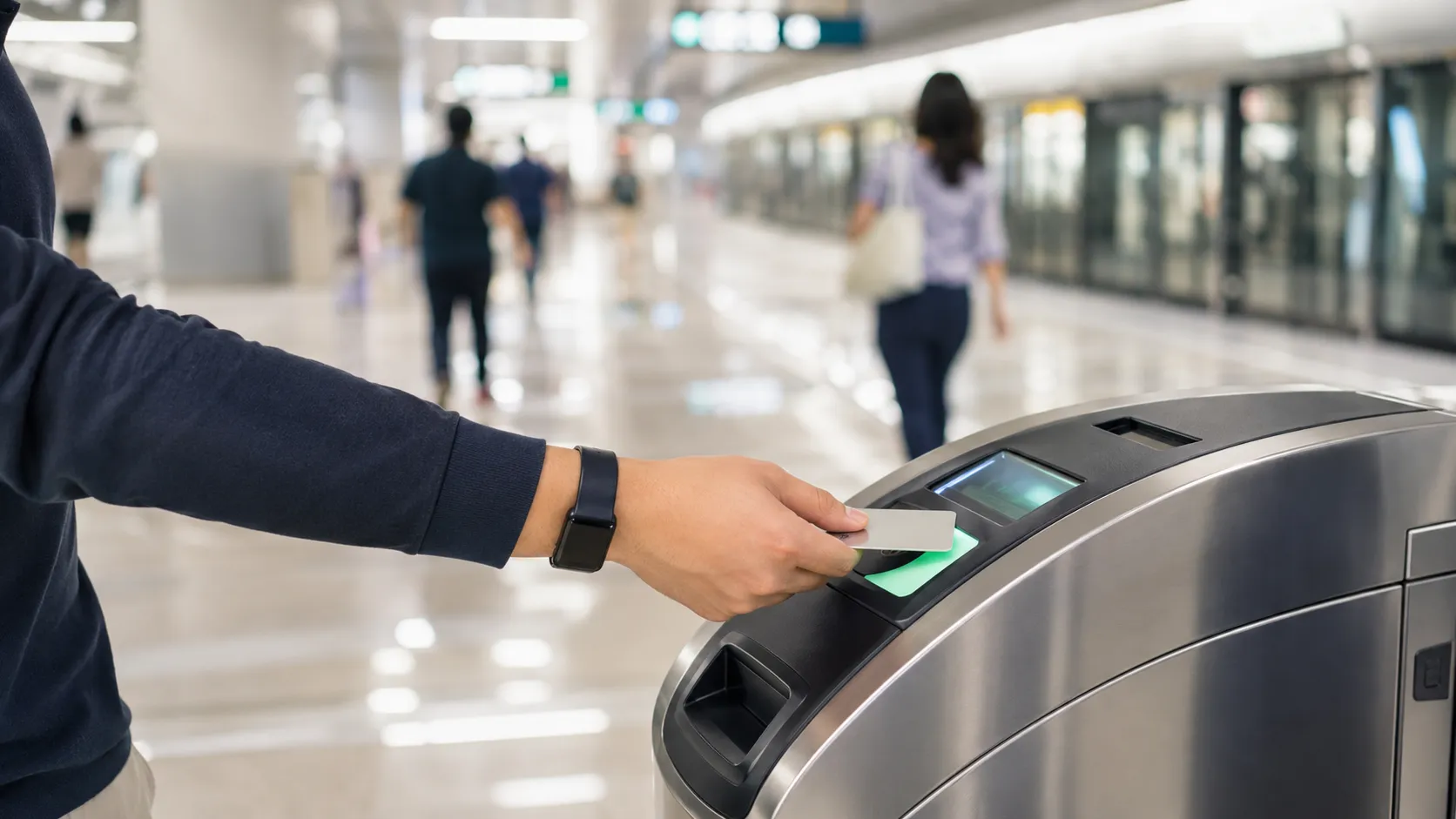
One of the quiet pleasures of Singapore is the MRT. You do not need a separate transit card. You tap straight through the gantry with a Visa or Mastercard and walk on. So all three cards went through the same rides.
Wise, the card that had just dominated the ATM, turned in the weakest FX rate of the three on transit. Ryt and Touch ‘n Go were both cheaper on the raw rate. Then the cashback split them apart. Ryt still paid its 1.2% cashback on public transport, credited a few days after the ride, while Touch ‘n Go paid nothing at all on transit. Add it up and Ryt became the cheapest card to tap into the MRT with, ride after ride.
That gap between the best FX rate and the best actual value is the whole point of comparing cards properly. A slightly worse rate with real cashback can beat a better rate that pays you nothing back.
5. Food and retail: Ryt again, on the cashback
Same three cards, one identical Shake Shack order each, so the price was fixed and only the billing differed. Wise’s FX rate was the weakest of the three again. Ryt and Touch ‘n Go both had slightly better rates, though the difference between them was small enough not to lose sleep over.
Cashback settled it once more. Ryt paid 1.2% on the meal with no minimum spend. Touch ‘n Go paid 0.5%, and while it can reach 3%, that only happens when a single transaction is above RM300. A burger, fries and a shake do not come close. For the kind of spending most people actually do on a trip, small food and drink buys well under RM300, the flat 1.2% quietly wins every time. Wise, with no cashback to offer, came in third.
6. The activation trap nobody warns you about
Now the part that almost sank the whole trip, and it had nothing to do with exchange rates.
At the very first ATM, the Touch ‘n Go Visa card simply would not work. It turns out the card cannot be used until you activate it with a PIN, and that PIN is printed on the physical letter the card arrives in. The letter, of course, was sitting at home in Malaysia. A call to the Touch ‘n Go call centre from Singapore offered manual activation instead, but that takes two to three days, which is useless when you are hungry and already overseas. What saved it was a phone call home and a spouse who found the letter and read out the PIN. Without that, the card would have been dead weight for the entire trip.
The other two were far smoother. Ryt was the easiest by a distance, mostly because it is already a daily-use card back home, so you land, start tapping, and never think about setup. Wise was not difficult either, but you have to top it up manually, and since most of us do not use it day to day, that meant loading it on arrival. Its real advantage sits on the other side of that inconvenience: you can top up a Wise card any time before a trip and lock in a rate when the ringgit is strong. That only pays off if you actually watch the market and top up at a better rate than you would get on the day you travel. If you are the sort who tracks FX before a holiday, a beginner can start with a card like Wise and pre-load it when the rate looks good. The rest of us will forget, which is the honest catch.
So the single most useful thing you can do before any trip costs nothing: activate your Touch ‘n Go Visa with its PIN before you fly, and never assume a card will switch on the moment you land.
7. So which card should you actually carry?
Put the three tests together and there is no clean, single champion. There is a best card for how you specifically spend.
If your travel spending looks like most people’s, food, transport, drinks and small items, mostly under RM300 a purchase, Ryt gives the best mix of FX rate and cashback. It won transit, it won food, and it was the least fuss to use. For an average Malaysian traveller, it came out on top on this trip.
If you shop big, and your purchases regularly clear RM300 in a single swipe, Touch ‘n Go’s up-to-3% cashback becomes the strongest card in your wallet. That tier was built for shoppers, not for someone buying nasi lemak and a teh tarik.
And if you like to plan, watch the ringgit and lock in your currency before the trip, Wise is the card for you. It also stays the cheapest way to pull cash from an overseas ATM. Just make sure the rate on the day you top up is genuinely better than the rate on the day you travel, or the advantage disappears.
What to actually do with this
- Activate your Touch ‘n Go Visa card with its physical PIN before you leave the country. Do not assume you can do it from the app abroad.
- For foreign ATM cash, judge the exchange rate, not just the fee. Wise’s mid-market rate won even after a roughly SGD 5 withdrawal fee.
- For daily spending on food and transport, a no-minimum cashback card like Ryt’s 1.2% usually beats a tiered card whose top rate you rarely trigger.
- Only chase Touch ‘n Go’s 3% if your single purchases genuinely clear RM300, which everyday travel spending almost never does.
- If you like locking in FX ahead of a trip, pre-load Wise when the ringgit is strong, and accept that you have to watch the rate for it to pay off.
- Carry more than one card and a little cash. One card failing, whether from activation trouble or a declined tap, should never be able to strand you.
The conclusion is unglamorous. No card is cheapest for everyone, because “cheapest” depends entirely on how you spend, not on whoever has the loudest slogan. Match the card to your own habits, carry a backup, and you will keep more of your money than the traveller who just grabbed whatever card their friend swore by.
This episode was made in collaboration with Ryt Bank, who did something rare: they told us to test their card honestly against the others and publish the real numbers, with no control over the video or the result. Ryt is also running its #RytAroundTheWorld challenge, where you can share where your card has travelled with you for a chance to win prizes like a stay at Pangkor Laut Resort or high tea at the Ritz-Carlton, running until 31 December 2025. Some links here are affiliate links, and Finlit may earn a commission at no extra cost to you.