BNPL vs Credit Card: Which One Traps You?
Everyone warns you about Buy Now Pay Later and trusts credit cards. Look at how each one actually works and you may rethink which is the riskier choice.
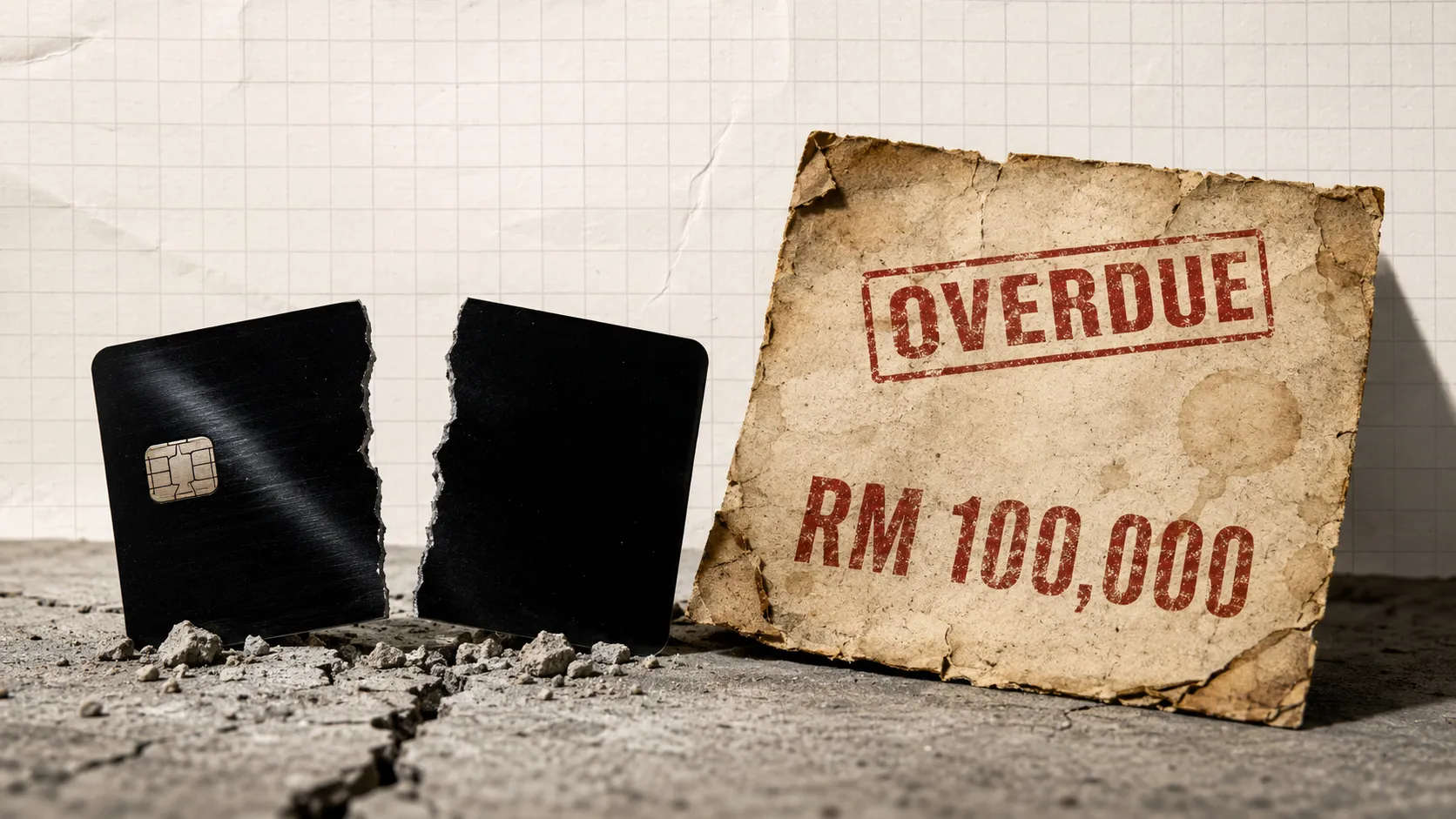
Scroll through Malaysian social media for five minutes and you will find someone warning that Buy Now Pay Later is ruining a generation. No control, no checks, debt for a RM15 lunch. In the same breath, nobody blinks at credit cards. We have decided one is reckless and the other is responsible.
Both are debt. You swipe or tap, you get something now, you pay later. The question worth asking is which one actually keeps you stuck the longest, and the numbers answer it clearly enough.
1. We fear one and trust the other, for no clear reason
Ask anyone over forty and they will remember a parent saying credit cards are dangerous, don’t touch them. Today the same people carry two or three without a second thought. BNPL is running through the exact same cycle, a few years behind. It arrived, it felt a bit exciting, then it got a bad name as more people piled in.
The gap is obvious once you look. We criticise BNPL for having no control, yet we are perfectly relaxed about a credit card that will happily let you carry a balance for a decade. If uncontrolled debt is the real enemy, and it is, then the label on the product matters far less than how it behaves when you fall behind.
2. How each one actually works
A credit card is old, familiar infrastructure. You spend, you get roughly a month, and as long as you clear the full amount you pay no interest. BNPL is newer and structurally different. It is unsecured consumer credit, meaning there is no collateral behind it, offered in small amounts, often over three instalments, frequently at zero percent if you pay on time. Klarna built its name on that overseas; here you meet it as an Atome or SPayLater option at checkout on a RM15 purchase.
The bigger difference is who gets approved. A bank checks your income before it gives you a card. It looks at your payslip, your EPF, the stability of your job, and sizes your limit to that. If you work for a bank or the government you get a higher limit; if you drive Grab or run a nasi lemak stall, getting a card at all can take a long time, because there is no easy proof you can pay it back. BNPL skips almost all of that. If you can reach the platform, you can usually use it.
3. Who Buy Now Pay Later is actually for
That missing income check is the loudest criticism of BNPL, and it is also the reason it exists. Only about 40 to 50 percent of Malaysians hold a credit card. The rest are what the industry calls underbanked, and the group is growing as more people freelance, do gig work, or earn in ways a bank statement does not capture neatly.

Picture a father in a B40 household driving Grab to get by. This month it is either fix a punctured tyre or buy milk powder. Skip the tyre and he cannot work; skip the milk powder and his baby goes without. He walks into a bank and asks for a card to cover RM20 of formula. The officer says no, because there is no way to be sure a RM20 borrower will pay it back. BNPL will give him that RM20. You can argue about whether he should borrow at all, and that is a fair moral question, but it is separate from whether the tool should exist. For the many people the banking system leaves out, it is often the only credit they can get.
4. The real test: which one lets debt pile up
The thing that tells you whether a credit tool is dangerous is simple: does it let you keep piling on debt without ever forcing you to stop? Judged that way, the two behave very differently.
Start with cost, because this is where BNPL genuinely looks worse. A Malaysian credit card runs about 15 to 20 percent a year. BNPL advertises zero percent, but once you miss payments and the late fees stack up, the all-in cost lands nearer 30 percent.
So on interest alone, BNPL is the pricier place to owe money. But a high rate also works as a deterrent: a 30 percent cost staring at you is much harder to ignore than a small minimum payment that makes carrying a balance feel harmless.
5. Repayment is where the credit card gets you
Look at what each one asks of you when the bill lands. A credit card lets you pay a minimum, often around 5 percent of the balance, and carry the rest. Pay that small amount and nothing happens: no block, no penalty beyond interest, and you keep spending right up to your limit. That is the feature that keeps people in debt. Owe RM5,000, pay the minimum every month, and you can still be carrying that balance years later while the interest keeps running.
BNPL does the opposite. Miss a single instalment and it locks the whole account. You cannot buy anything else, not a single ringgit, until you clear what is due. It is blunt and it stings, but it means you physically cannot dig the hole deeper. You settle this month before the next purchase is even possible.
Put those side by side and the usual story turns around. BNPL charges you more to borrow, but the credit card is the one that lets debt build up for years, because it never forces you to stop.
6. Regulation, and where this goes next
For a long time BNPL sat outside the rules, which is a version of an old problem. Picture a shared field where every farmer knows the grass lasts if each cow grazes an hour a day. With no rules, one farmer grazes two hours, the next matches him so as not to lose out, and soon the field is stripped bare. Left alone, a market often races to the bottom until someone steps in. Credit cards got tighter rules only after enough people went bankrupt on them.
BNPL has now reached that point in Malaysia. It is regulated, and missed payments are recorded against your credit file, so you can no longer walk away from a default with no consequence. That is a real improvement. The part still worth watching is the limits. BNPL accounts can now climb into five figures, and providers keep nudging them up the moment your spending looks strong, the same habit that gets people into trouble with cards. A sensible next step is to tie higher limits to proof of income, the way a bank does, so a RM10,000 line is not handed to someone earning RM2,000 a month.
What to actually do with this
Neither product is evil on its own. The outcome is mostly down to how you use it, so a few rules keep either one in its place:
- Judge the behaviour, not the label. Ask whether a tool lets you keep piling on debt. A credit card does; BNPL, by locking you out after a miss, does not.
- Never carry a credit card balance on the minimum. That single habit is what turns a small purchase into a multi-year debt. Clear the full statement or do not spend it.
- Treat BNPL as short-term, not a discount. Zero percent only holds if you pay on time. One missed instalment and you are borrowing at close to 30 percent.
- Watch your limits. If a provider keeps raising your BNPL or card limit past what you actually earn, that is a warning sign, not a reward.
- Know your own weak spot. If you are forgetful, the account that locks you out may protect you better than the one that lets you drift.
If keeping track of instalments and due dates is the part you always lose, our own WhatsApp money assistant MoneyMama can nudge you before a payment slips. (Some links here are affiliate links; Finlit may earn a commission at no extra cost to you.)
The awkward part is that the product almost everyone trusts is the one built to keep you paying for years, while the one everyone warns about is harder to drown in. Both can still sink you if you ignore how they work. So before you tap or swipe, be honest about the kind of borrower you are, and pick the one that will actually make you stop.